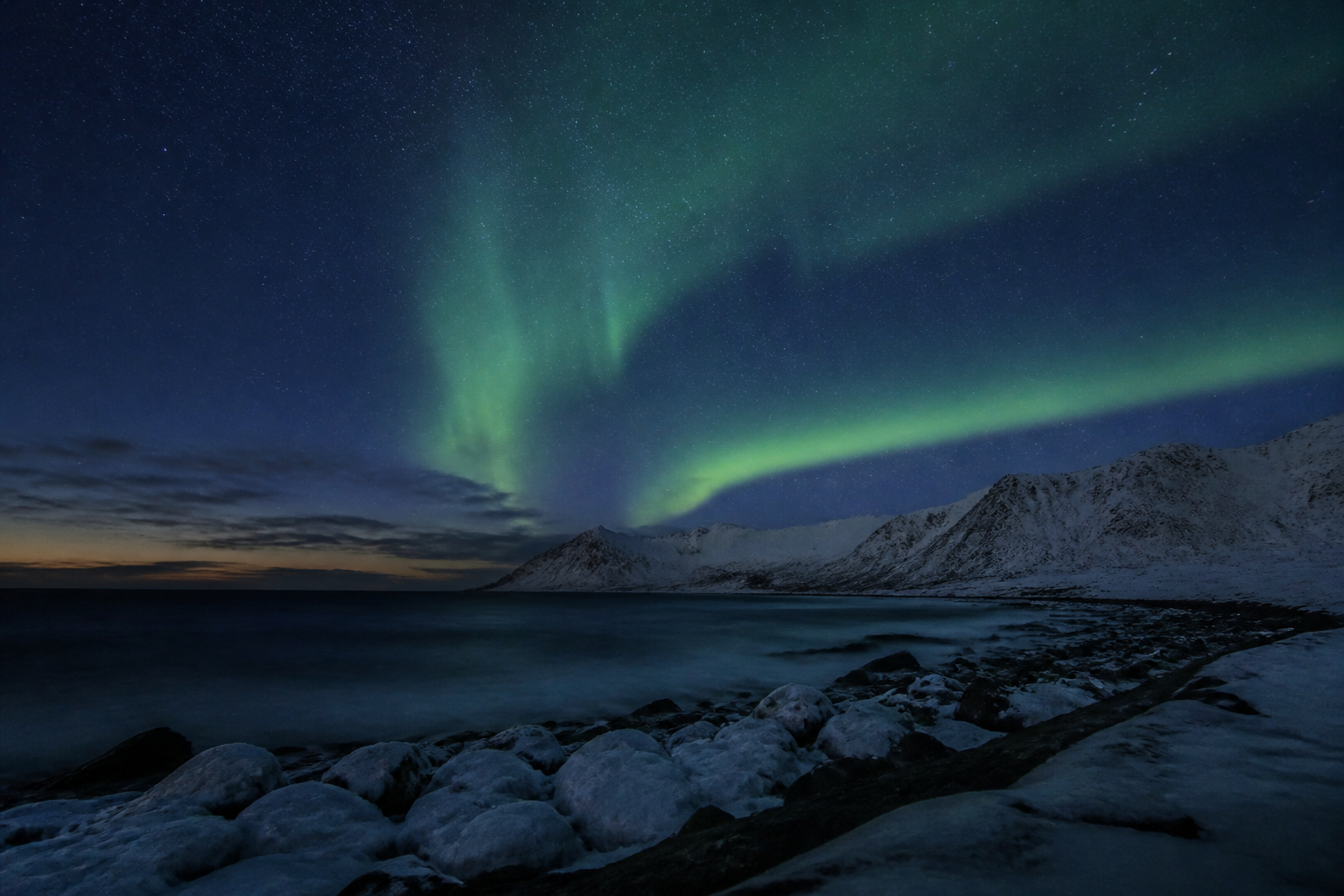
Kola Peninsula & Murmansk at a glance
| Best months | December to March; December and January bring polar night, while February and March add more daylight with dependable snow |
| Typical temperature | About -8 to -15°C around Murmansk and accessible Kola, with colder spells and stronger wind chill on exposed coasts or plateaus |
| Snow conditions | A long season, generally from mid-October to mid-May and longer in mountain areas; coastal wind can redistribute snow and affect roads |
| Aurora relevance | Strong — a core winter reason to visit, subject to darkness, cloud and geomagnetic activity |
| Approximate five-day ground budget | RUB 60,000–90,000 (approx. £520–£780) per person from Murmansk, using mid-range accommodation and shared excursions |
| Main gateway | Murmansk Airport and Murmansk city; Khibiny can also be approached via Khibiny Airport |
| Best for | Northern Lights, Arctic tundra, Teriberka, Khibiny snow, polar-night photography and organised winter activities |
Why visit in winter?
Kola offers the most complete aurora proposition among the five Russian winter destinations. The peninsula lies above the Arctic Circle, while locations away from Murmansk's urban light provide darker viewing conditions. The trip does not need to depend on one night: Teriberka, tundra, Khibiny terrain, dog sledding, reindeer activities and regional culture create a wider Arctic programme.
The landscapes also vary within the region. Murmansk is the practical base, Teriberka faces the ice-free Barents Sea, and the Khibiny Mountains add a different snow-and-mountain environment around Kirovsk. Lovozero and tundra experiences introduce Sami context, while the coast carries Pomor associations. These places are connected at regional scale, but they still require road, rail or organised transfers rather than functioning as one walkable destination.
This makes itinerary design important. A Murmansk stay can support aurora outings and selected day trips, but Teriberka and the Khibiny pull in different directions and depend on separate transport. Travellers trying to include the coast, mountain sport and tundra activities should allow for transfer time and weather changes rather than count every experience as a guaranteed daily departure.
December and early January produce the strongest polar-night atmosphere. The sun remains below the horizon, but the day is not uniformly black: twilight and blue-hour light can be valuable for photography. February and March give a more conventional balance of daylight, snow activities and dark evening windows.
Strengths: Russia's clearest aurora destination; genuine Arctic tundra; a long snow season; the unusual combination of mountains and Barents coast; and an urban gateway capable of supporting several different outings.
Trade-offs: aurora and coastal access are weather-dependent; polar-night daylight is extremely limited; the principal sights are spread out; and private excursions can make the trip substantially more expensive than a basic Russia holiday.
Best winter experiences
- Northern Lights viewing outside Murmansk: Darker skies improve the setting, but no operator can guarantee clear cloud or auroral activity.
- Teriberka and the Barents Sea: The winter coast, exposed landscape and road journey create Kola's strongest coastal contrast.
- Khibiny skiing or snowboarding: The mountains provide the region's main downhill snow-sport setting.
- Snowmobiling or snowshoeing on the tundra: Organised activities open landscapes beyond the urban base.
- Dog sledding and reindeer experiences: These add an active and cultural dimension to an aurora-focused itinerary.
- Sami and Pomor context: Regional culture helps distinguish Kola from a generic northern-lights trip.
- Polar-night and blue-hour photography: December and January offer distinctive low-light conditions, while later winter adds more usable daylight.
Snow, aurora and winter conditions
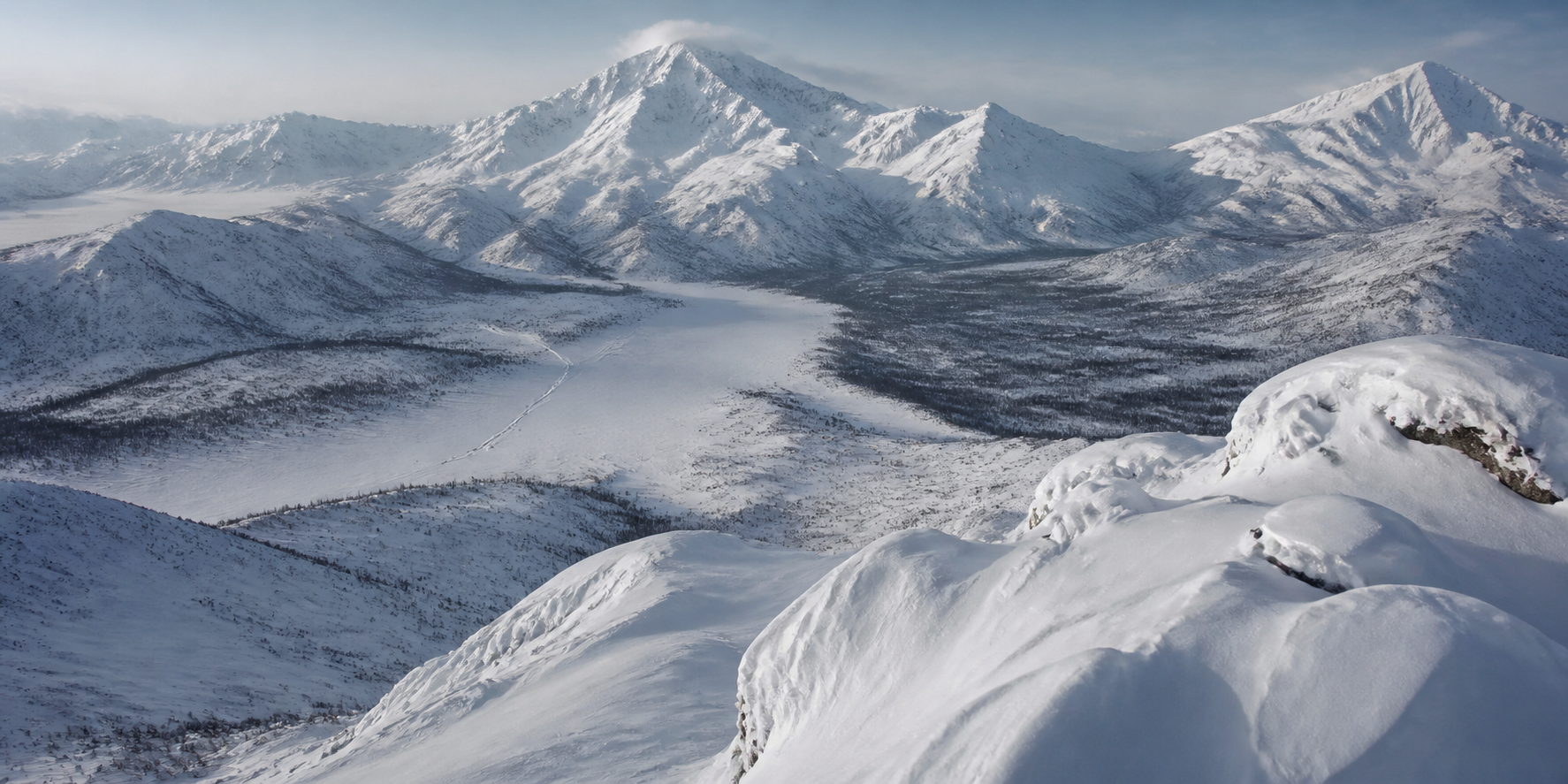
Snow cover generally lasts from mid-October to mid-May, extending from late September to mid-June in mountain areas. This supports a long operating season for tundra and Khibiny activities. Coastal wind can redistribute snow, reduce visibility and affect the Teriberka road even when conditions in Murmansk appear manageable.
Aurora relevance is classified as strong, but this describes regional potential, not a sighting promise. Darkness, a sufficiently clear sky and geomagnetic activity must coincide. A multi-night plan with other daytime experiences is more realistic than treating one aurora outing as the sole purpose of the trip.
Temperatures around Murmansk and accessible parts of the peninsula are typically about -8 to -15°C, though colder spells occur. Wind chill can make exposed coasts and plateaus feel substantially harsher. The maritime influence means average temperatures may be more moderate than in continental Arctic interiors, but the weather remains operationally important.
Polar night also changes the practical meaning of a winter day. December and early January provide long darkness for aurora attempts, yet they reduce the time available for coastal and mountain scenery. Later winter trades some night-time atmosphere for more daylight, which can make a mixed itinerary easier to operate and photograph.
Best time to visit
Choose December or January for polar night, long dark windows and the strongest Arctic atmosphere. This period also has the shortest usable daylight, so coastal sightseeing and photography require realistic expectations.
Choose February or March for more daylight while retaining dependable snow and dark evenings. These months generally suit travellers who want to combine aurora attempts with Khibiny, Teriberka and active outings. No month removes cloud risk or guarantees the coastal road will remain open.
How to get there
Murmansk Airport and Murmansk city are the main gateway. The city works as the starting point for aurora outings and road-based excursions. Teriberka, Lovozero and other peninsula locations continue by road or organised transfer.
Kirovsk and the Khibiny require a separate road or rail transfer and can also be approached through Khibiny Airport. Because destinations are dispersed and winter conditions affect roads, an itinerary should distinguish Murmansk-based day trips from a separate Khibiny stay rather than assume every location is easily combined.
Winter costs
The existing five-day ground benchmark is RUB 60,000–90,000 (approx. £520–£780) per person, starting from Murmansk and using mid-range accommodation with shared excursions. It is the relevant regional figure; the lower national Russia baseline is not an accurate budget for an organised Kola winter trip.
Private aurora hunts, Teriberka transfers and Khibiny excursions can push the total above the range. Weather disruption may also change which activities operate. The benchmark excludes international flights and should be treated as a planning range rather than a quote.
The range is most realistic for a shared programme based around Murmansk. Adding private vehicles for weather flexibility or dividing the stay between Murmansk and Kirovsk changes the cost structure, so the five-day figure should not be interpreted as an unlimited activity package.
What travellers say
Travellers frequently praise aurora hunting, Teriberka's Barents Sea scenery and the combination of husky or Sami-related activities with Arctic landscapes. The remoteness, tundra and polar-night atmosphere are repeatedly identified as the memorable elements.
The practical feedback is consistent: aurora are never guaranteed, and the single road to Teriberka can be disrupted by snow. Self-driving discussions therefore emphasise current road conditions, while reviews often favour organised transport during severe weather. This summary aggregates existing UGC without creating direct quotations.
How this destination fits into a Russia winter trip
Choose Kola within a Russia winter holiday when aurora and an Arctic setting are the priorities. Choose Lake Baikal instead for transparent ice and a February–March frozen-lake journey; Kamchatka for volcanoes, deep powder and specialist adventure; Altai & Siberia for continental mountains and a wider road journey; or Karelia for forests, lakes and a gentler cultural-nature mix.
Kola is less specialist than remote Kamchatka volcano routes but still depends on organised transfers for many headline experiences. The five Russian destinations are far apart and normally work as separate trips, not stages of one short itinerary.
Relevant comparisons: Best Northern Lights Destinations, Best Snow Destinations, Best Winter Wilderness Destinations and Best Winter Destinations.
FAQ
Is Murmansk good for the Northern Lights?
Yes. Kola is classified as a strong aurora destination, with viewing normally taking place outside urban light. Clear skies and geomagnetic activity are still required, so several nights are preferable to one attempt.
What is the best month to visit Murmansk in winter?
February and March offer the best balance of snow, longer daylight and dark evenings. December and January are better when polar-night atmosphere itself is the priority.
Is Teriberka worth visiting in winter?
Yes, if the Barents Sea coast and exposed Arctic scenery are important to the trip. The road can close or become difficult in severe weather, so the visit should remain flexible.
How cold is the Kola Peninsula in winter?
Typical conditions around Murmansk and accessible Kola are about -8 to -15°C, with colder spells. Wind chill on the coast and plateaus can make conditions feel considerably harsher.
How much does a five-day Kola winter trip cost?
The benchmark is RUB 60,000–90,000 (approx. £520–£780) per person from Murmansk. Private aurora outings, Teriberka transfers and Khibiny trips can move the real total higher.
Can I combine Murmansk, Teriberka and the Khibiny?
They can form one regional itinerary, but they are not one compact base. Teriberka requires a road journey, while Kirovsk and the Khibiny need a separate road, rail or airport approach.
Are the Northern Lights guaranteed in Murmansk?
No. Kola has strong regional potential, but sightings require darkness, clear cloud conditions and sufficient geomagnetic activity. Build the trip around a wider Arctic programme rather than one promised display.
Sources & notes
Facts and traveller sentiment were checked on 20 August 2026. This page uses only the existing Kola Peninsula & Murmansk sources:
- Tourist guide of the Murmansk region
- When to plan a Russian Arctic trip
- Tourism in the Murmansk Region
- Five-day Arctic Holidays cost benchmark
- Arctic Team traveller reviews
- Teriberka traveller reviews
- Murmansk–Teriberka self-driving discussion
GBP equivalents are approximate and use exchange rates checked on 20 August 2026. Actual exchange rates may vary.